




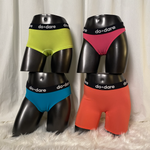

Late last month, Primark announced its first multi-year deal with a textile-to-textile recycler, a company called Circ. Recycled polyester made from textile waste is due to reach Primark clothing from 2029.
But the line that stuck with us came from Lynne Walker, who runs Primark Cares: "Clothes made to last longer don't have to come at a higher price."
We read it twice. It's half right, and we've got some thoughts.
First, what's new
Most clothing isn't one fibre. It's a blend, and blends are the reason recycling clothes is so hard. Circ's pitch is that it can take blends like polycotton and separate the polyester from the cellulose so both can go back into the supply chain. When the company first made headlines in 2022, it described polycotton as roughly half of all textile waste and said it uses "water, pressure and responsible chemistry" to recover materials.
So a real technical problem just got a real, multi-year commercial commitment. We think that's good news.
It's also a 2029 story. The biggest UK textile-recovery pilot in the news this month, "The Circuit", doesn't start sorting until January 2027. Recycling is going to matter a lot, later.
The part that's right: longer life is the lever you hold today
UK Sustainable Fashion Week ran from Sept 26 to Oct 4 under the theme "Threads of Resistance," with 347-plus community events across 41 hubs: clothing swaps, repair stations, "start your own repair workshop" sessions. The message was blunt. Buy less. Wear what you have for longer.
The numbers behind that message come from WRAP, the UK waste-reduction charity. Its research found that keeping clothes in active use for just nine more months could cut their carbon, water and waste footprints by roughly 20 to 30 percent each. Nine months. No new technology.
That's the part of Primark's sentence we agree with. Nobody needs a recycler to wear a pair for longer. If you take care of them, they'll last a long time!
Our fabric is viscose from bamboo. Bamboo pulp is turned into a very fine, soft fibre, and that fineness is why it feels the way it does. But viscose has a quirk: it loses a significant amount of its strength when wet. Textile references commonly put the loss at about 30 to 50 percent. But don't worry, the fibre gets its strength back when it dries.
This isn't a flaw. It's how the fibre behaves. But it means care matters more than it does with, say, a heavy cotton. The moment a pair is most vulnerable is in the machine and right after. So: gentle cycle, cooler water, turn pairs inside out, and go easy on the dryer. We've written out the full routine here. Out of everything in this post, it's the cheapest way to get more life out of a pair.
On price: lasting longer only counts if it actually lasts
Here's where we think Primark's sentence gets too tidy. A garment that lasts longer does cost less per wear, but only if it really does last, and only if you wear it that many times. Price isn't the thing to compare. Price per wear is.
An illustration, with round numbers made up to show the idea (not our prices, and not a claim about any brand):
Pair A costs $10, is worn 40 times. That's 25 cents per wear.
Pair B costs $30, is worn 150 times. That's 20 cents per wear.
Your own numbers will differ, but "price divided by wears" is a formula worth keeping in your head, for underwear and everything else you buy.
We still wear undies from 5 years ago, on a weekly basis. And the waistbands haven't even shown a hint of stress. The fabric does pill a bit after awhile, but the durable bamboo viscose is still going strong.
Textile recycling in Ontario
We found two local cities with textile re-use programs, not necessarily making more clothes from the fabric, but turning it into things like car seats, insulation, and furniture padding.
So if you're near Markham or Newmarket and you have undies and clothing you'd like to keep out of the landfill, you can check out the sources at the bottom of this post.
Thank you Karen for telling us this exists. We would love to hear more, if anyone else knows of other programs, let us know and we'll add them!
We won't pretend Made-in-Canada is cost effective.
It isn't. Our labels come from Markham, our waistband and thread from Montreal, and the sewing happens in Scarborough, and we've broken down where that money goes in a previous blog post.
The case we'd make isn't "cost more, therefore better." It's all about the longevity that results from good manufacturing. And reducing the overall kilometres travelled for our supply chain.
Where we land
We'd love to see textile-to-textile recycling get to scale, and we'll cheer when it does. But a pair that's made with intention, cared for, and worn for years beats a promise about recycling in 2029. Both can be true, and the second one doesn't need a recycler. It needs a good waistband and a cold wash.
-Sarah+Rob
Frequently Asked Questions - Making Underwear Last
How long does do+dare underwear last?
It depends on how it's washed and worn, so it's difficult to give a single number. A well-made pair that's washed cool on a gentle cycle, inside out, with no fabric softener and little or no high-heat drying should last much longer than one that's tumbled hot with jeans. Signs a pair is done: the waistband stays stretched after washing, the fabric has thinned, or seams are separating.
Is "made to last" underwear actually cheaper in the long run?
It can be, but only if it really lasts. The useful measure is cost per wear: price divided by the number of times you wear it before retiring it. A $30 pair worn 150 times costs less per wear than a $10 pair worn 40 times (20¢ versus 25¢; illustrative numbers).
What part of underwear wears out first?
Usually the waistband, however with do+dare undies, we've noticed that they're lasting for many years. Rob and Sarah both have original undies with original waistband from 5 years ago, still worn weekly! Elastic that doesn't recover after stretching is the most common reason a pair gets retired, followed by seams opening at stress points and fabric thinning.
Is bamboo underwear actually made of bamboo?
It starts as bamboo, but the fibre in most bamboo clothing, including ours, is made by turning bamboo pulp into viscose, a type of rayon. That's why Canada's Competition Bureau requires labels like "viscose from bamboo" or "rayon from bamboo" instead of plain "bamboo."
Why does bamboo viscose need special care?
Viscose fibres lose a significant amount of strength when wet (commonly cited as around 30 to 50%) and regain it once dry. So the washer is where the fabric is most vulnerable. We recommend a gentle cycle, cooler water, turning pairs inside out (or using a mesh laundry bag), and low heat or air-drying.
Can I put do+dare underwear in the dryer?
Low heat is the safer choice, and hang-drying is gentler still. High heat is hard on both viscose and elastic.
Is do+dare underwear recyclable?
Not in a way we'd want to promise. Textile-to-textile recycling of blended fabrics is only starting to scale (the Primark and Circ deal puts recycled polyester into clothing from 2029). We don't claim a recycling pathway for our underwear today. The most useful thing we can offer right now is a pair that lasts.
What should I do with underwear that's worn out?
Retire pairs when the waistband stays stretched, the fabric has gone thin or see-through, or the seams have opened. Worn-out underwear is generally not accepted for resale or donation, so check with your local textile-recycling program about what they take. If you're in Markham or Newmarket, there are a number of dropoff spots for programs that turn textiles into things like furniture padding, insulation, and car seats, and they do take worn-out underwear. We've written more ideas for worn-out undies here.
Is do+dare actually made in Canada?
Yes. Every pair is imagined in Burlington, Ontario, and sewn in Scarborough, Ontario. Labels are made in Markham, Ontario, and the waistband and thread come from Montreal, Quebec. Yes, the fabric is from overseas - our Canadian bamboo production can't compete!
Why does do+dare cost more than big-box underwear?
Mostly because it's made in Canada, with a local supply chain and a quality-control step before pairs ship. We don't claim a higher price means a better pair on its own; what matters is how long it lasts and how you care for it. Our full cost breakdown is here.
What if my do+dare underwear doesn't hold up?
Tell us. Use the contact page or reply to any of our emails. Customer feedback goes straight into our quality-control notes.
How can I make my underwear last longer?
Wash cooler on a gentle cycle, turn pairs inside out, use a mesh bag if you have one, skip fabric softener, go easy on dryer heat, and rotate through your drawer instead of wearing the same three pairs. Here are the details.
Does making clothes last longer really help the environment?
Research from the UK charity WRAP found that keeping clothes in use for nine more months could cut carbon, water and waste footprints by roughly 20 to 30 percent each. Longer life is one of the few sustainability steps a customer controls directly, today.
Is do+dare underwear a good fit for me?
Probably, if you want comfortable, Canadian-made underwear and you're willing to wash it a little more carefully. It's probably not the right fit if you want the cheapest possible pair or if you tumble everything on high heat.
Sources
Textile Recycling Programs in Ontario
Textile Recycling & Sustainability
-
Primark Signs Multi-Year Textile Recycling Agreement with Circ | FashionUnited, September 2026
-
Highlights from the UK's Sustainable Fashion Week 2026 | FashionUnited, October 2026
-
Recycling Polycotton: The Future of Textile Waste | FashionUnited, August 2022
-
WRAP Publishes Clothing Durability Guide | FashionUnited, December 2015
Fabric Properties & Labelling
-
Viscose Fibre Properties | Swicofil
-
Guidance on Labelling Textile Articles Derived from Bamboo | Competition Bureau Canada